
An Organic Coffee Table in Carved Ash
Some tables are built. These two were grown — or at least, that's how they started. A coffee table and a side table in whitewashed ash, carved by hand into shapes that don't come from a ruler: freeform tops like river stones, legs that taper to a point, and a pedestal base that flares like the foot of a mushroom.
There isn't a straight line on either of them. The large table's top is an irregular oval with a soft notch cut into one side, and it stands on three tapered conical legs — laminated ash, so the layers read as quiet horizontal bands running down each leg. The smaller table is a single sculpted pedestal: its top is a leaf-shaped oval, and the base swells from a narrow waist down to a wide, flat foot.
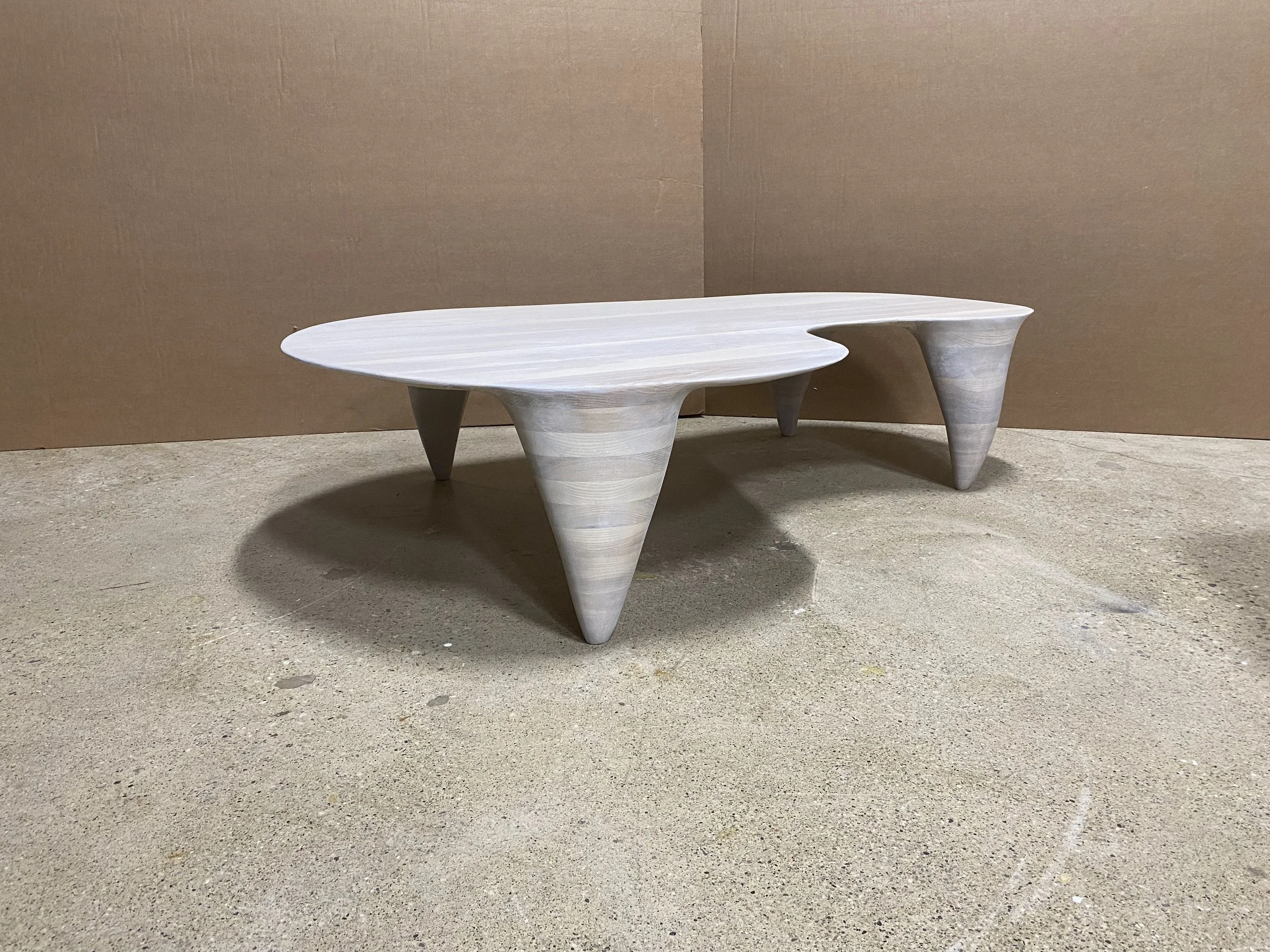
The two are made to live together. The small table's curve fits the notch in the large table's top, so they nest into one composition — pull the small one out and it stands alone as a side table; push it back and the pair reads as a single piece.
Ash was the right wood for this. It's strong enough to hold a top on legs this thin, pale enough to keep the forms light, and it carves cleanly, so the grain stays visible through the whitewash instead of disappearing under it.
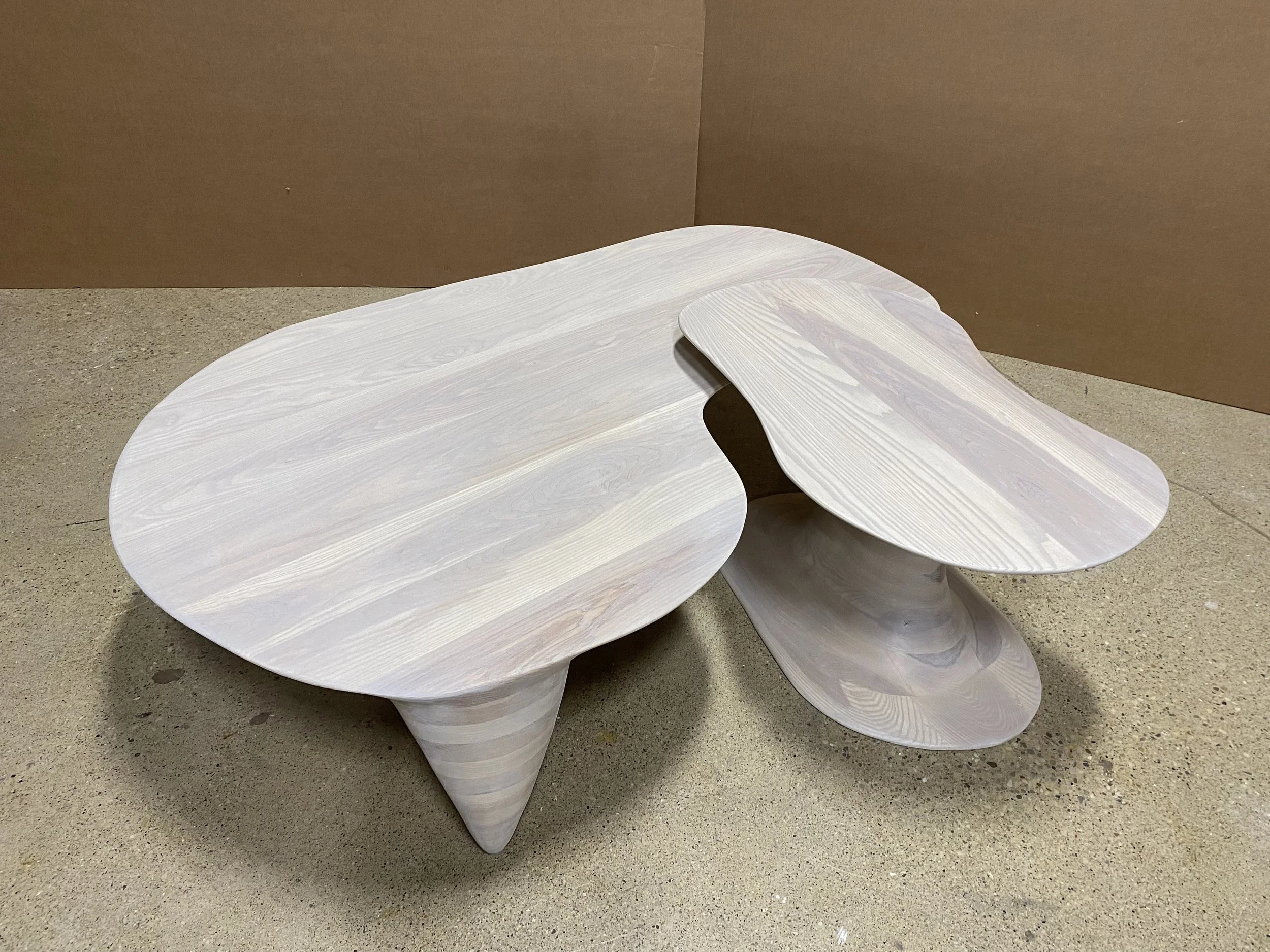
The carving is the slow part. Each leg is shaped by hand, thinned until it feels right, and every edge is worked until the top flows into the base instead of meeting it at a seam. That's what makes them organic —
not the shape alone, but the fact that no two points on them are machined the same.
A coffee table sits in the middle of a room, so it gets looked at from every side and touched every day. These two were made for that: interesting from above, from the side, and from the floor where the legs meet the ground.
Dawid Czerniejewski
NAME THIS DESIGN
namethisdesign.com